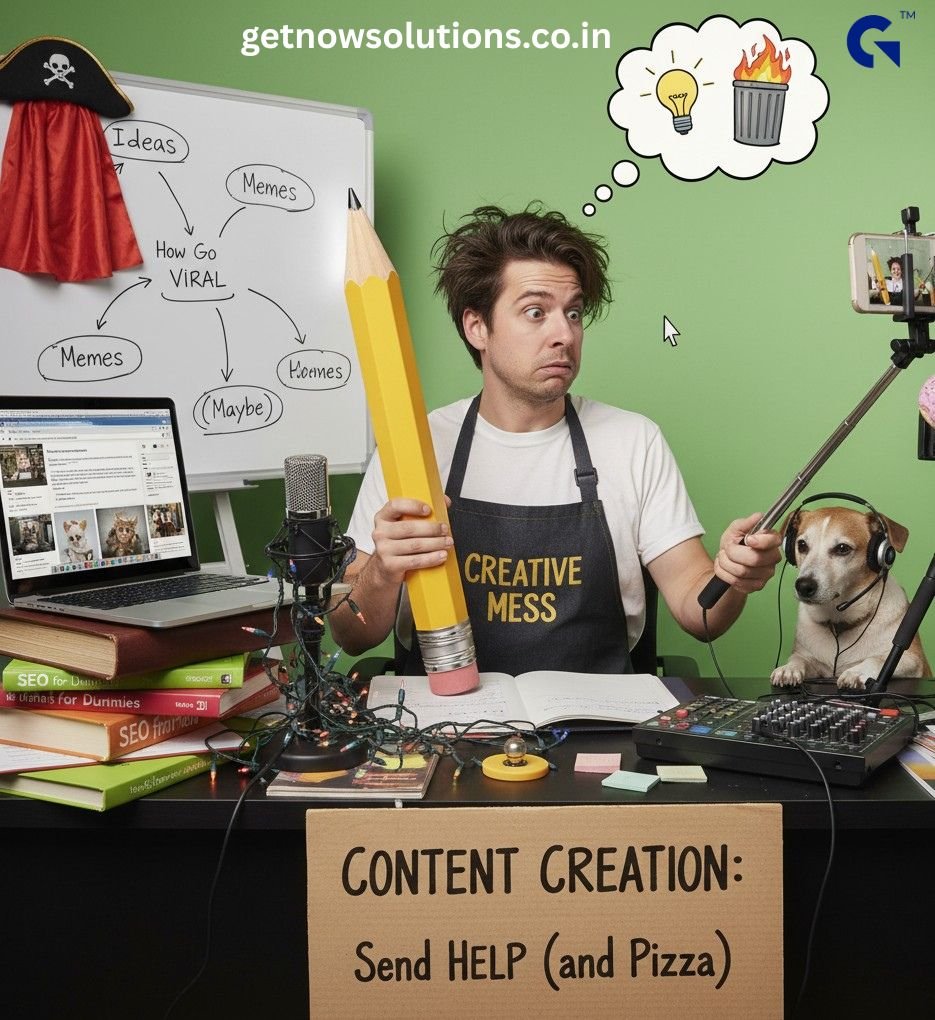
In today’s digital landscape, mastering content creation is no longer just about producing articles or videos—it’s about crafting a strategic, authoritative resource that captures both attention and search engine recognition. High-performing content must achieve more than ranking in the top ten organic results; it must dominate rich SERP features like Featured Snippets, People Also Ask (PAA) boxes, Knowledge Panels, and video carousels. This approach positions your content as the definitive resource, establishing trust, authority, and long-term visibility.
The journey to building such a pillar content piece begins with understanding the competitive SERP landscape. For the keyword “Content Creation,” top-ranking results are dominated by diverse formats that cater to different user intents. Users are increasingly satisfied by zero-click results, where Google directly delivers answers on the search page. To succeed, content must be engineered for extraction: concise, unambiguous paragraphs serve as ideal candidates for Featured Snippets, while numbered or bulleted lists effectively capture “how-to” queries and PAA expansions. Structuring content with this in mind not only improves algorithmic recognition but enhances readability and user experience, which are core metrics in Google’s evaluation of page quality.
Competitive analysis shows that the most successful content creators approach content creation holistically. High-value pillar content does not stop at definitions; it provides a complete workflow, operational guidance, and strategic insight. Key areas include advanced keyword research, selection of appropriate content formats—from articles and infographics to podcasts—alignment with the buyer’s journey, and a meticulously planned publishing calendar. Integrating clear, repeatable workflows for topic ideation, stakeholder collaboration, review, and pre-publication checks ensures that the content functions as a practical guide, addressing common pain points while positioning the publisher as a subject-matter authority.
Maximizing organic visibility also requires a semantic keyword strategy. While the primary keyword, “Content Creation,” anchors the page, ranking sustainably demands the integration of clusters of related primary keywords, secondary terms, and long-tail phrases. Semantic depth ensures Google recognizes the content as contextually complete. For instance, terms like “content marketing,” “digital content generation,” “publishing calendar,” and “buyer’s journey” reinforce the breadth of coverage. Long-tail phrases such as “how to improve content creation process for SEO” or “ethical AI content creation workflows” attract high-intent traffic, often signaling a readiness to engage with actionable resources. Incorporating these naturally within headings, subheadings, and the body text balances search engine optimization with human readability.
A particularly powerful tool in content architecture is the People Also Ask (PAA) feature. PAA boxes reveal current, unfiltered user queries, highlighting gaps in competitor coverage and providing actionable subtopics for content expansion. By integrating PAA questions directly into H2 and H3 headings, content aligns perfectly with user intent, enhancing relevance and increasing the likelihood of rich snippet capture. Foundational questions such as “What is the content creation process?” should be answered in clear, step-by-step formats, while strategic inquiries like “Why is content creation important for business?” warrant concise, benefits-driven explanations that emphasize ROI, authority building, and long-term funnel support. Addressing PAA questions thoroughly fosters a positive feedback loop: readers find precise answers, engagement metrics improve, and Google interprets the page as authoritative and trustworthy.
Beyond strategy and keyword architecture, high-ranking content demands adherence to E-E-A-T principles—Experience, Expertise, Authority, and Trustworthiness. Demonstrating expertise involves author attribution, citation of reputable sources, and, where possible, sharing proprietary workflows or original insights. Transparency is increasingly critical, particularly regarding AI usage; disclosing data sources, mitigating algorithmic bias, and ensuring content fairness strengthens credibility. Additionally, content must maintain value-driven, natural language to support readability and comprehension while seamlessly integrating strategic keywords.
Technical SEO complements these qualitative mandates. Structured Schema markup, including FAQ and HowTo schemas, signals search engines about the content’s organization and eligibility for rich results. Optimized title tags and meta descriptions improve click-through rates, while mobile-first design and fast-loading pages align with Core Web Vitals requirements. Thoughtful design choices, including ADA compliance, further expand accessibility and user satisfaction, signaling quality to both users and search engines. Internal linking to supporting cluster content consolidates topical authority, while authoritative external citations enhance credibility, reinforcing E-E-A-T and search visibility.
Future-proofing content is a strategic differentiator. The rapid adoption of generative AI in marketing workflows necessitates guidance on ethical usage, bias mitigation, and responsible automation. Positioning AI as an efficiency tool rather than a replacement for strategic thinking helps content teams produce higher volumes without compromising quality. Similarly, aligning content strategies with sustainability and purpose-driven messaging meets growing consumer expectations for socially responsible brands, reinforcing authority and trust. Optimizing for voice search and conversational queries ensures that content remains relevant as search behaviour evolves, while acknowledging the continued influence of video and podcast formats encourages multi-channel reach and engagement.
Ultimately, building a pillar content piece on content creation requires the convergence of strategic intent, technical precision, and forward-looking insights. By systematically mapping user intent, integrating semantic and long-tail keywords, leveraging PAA-driven architecture, adhering to E-E-A-T principles, and implementing advanced technical SEO, a brand can achieve not only top-ranking organic positions but also capture zero-click opportunities. Incorporating emerging trends in AI, sustainability, and voice search ensures the content remains authoritative and competitive well into the future. The result is a comprehensive, actionable guide that satisfies readers, impresses search engines, and establishes enduring thought leadership within the content creation niche.